

Noise Monitoring as per CPCB Guidelines: A Complete Guide
What is Noise Monitoring ?
CPCB Noise Standards
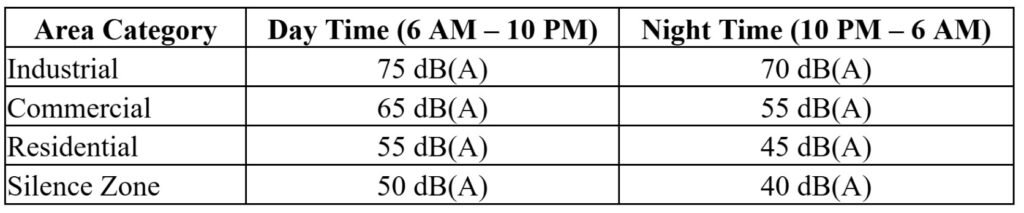
The CPCB classifies areas into four categories and prescribes permissible noise limits (in dB(A) Leq):

Key Guidelines for Noise Monitoring
The Factories Act (India) mandates provisions to ensure a safe and healthy working environment. Key IAQ-related requirements include:
- Equipment Requirements
- Use calibrated sound level meters compliant with standards like IEC 61672.
- Prefer integrating sound level meters for continuous monitoring.
- Monitoring Parameters
- Leq (Equivalent Continuous Sound Level) is the primary metric.
- Measurements should reflect average noise over time.
- Monitoring Duration
- Daytime and nighttime measurements must be recorded separately.
- Continuous 24-hour monitoring is recommended for accurate assessment.
- Monitoring Locations
- Select locations based on:
- Population exposure
- Proximity to noise sources (traffic, industries, construction)
- Sensitive receptors (schools, hospitals)
- Frequency of Monitoring
- Regular monitoring is required in urban areas.
- Special monitoring during festivals, construction projects, or complaints resolution.
Methods of Noise Monitoring
Manual Monitoring
- Conducted using portable sound level meters.
- Suitable for short-term assessments.
Continuous Monitoring
- Uses automated stations for real-time data collection.
- Increasingly adopted in smart cities.
Data Analysis and Reporting
- Compare measured values with CPCB limits.
- Identify peak noise periods and sources.
- Maintain records for compliance and audits.
- Reports should include:
- – Location details
- – Time of monitoring
- – Equipment used
- – Observed noise levels
Importance of Noise Monitoring
- Protects public health (reduces stress, hearing loss, sleep disturbance)
- Ensures regulatory compliance
- Supports urban planning and zoning decisions
- Helps in controlling noise at the source
Legal Framework
Noise monitoring in India is governed under the Noise Pollution (Regulation and Control) Rules, 2000. These rules empower authorities to enforce limits and take action against violations.
Challenges in Noise Monitoring
- Lack of awareness
- Inadequate monitoring infrastructure
- Urbanization and traffic growth
- Festival and event-related noise spikes

Best Practices
- Conduct regular monitoring in high-risk areas
- Use noise monitoring instrument with data logger facility
- Conduct public awareness campaigns
- Enforce penalties for violations
Conclusion
Noise monitoring, as per CPCB guidelines, is essential for maintaining a healthy acoustic environment. With proper implementation, technology adoption, and public cooperation, cities can effectively manage and reduce noise pollution.