
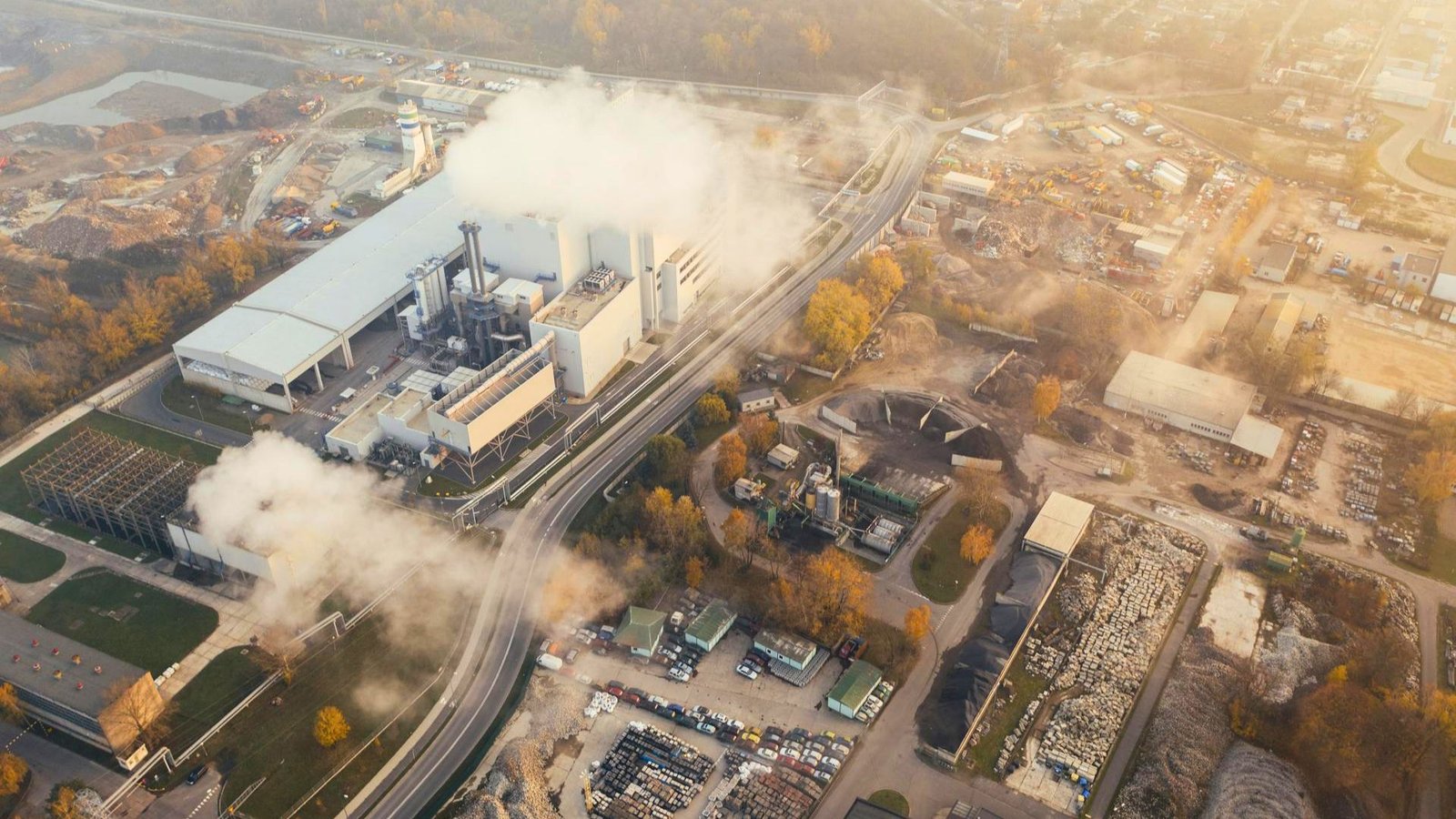
Stack Emission Monitoring as per CPCB Guidelines
Industrial growth is essential for economic development, but it also brings environmental challenges—especially air pollution. One of the most critical aspects of air quality management is stack emission monitoring, which ensures that pollutants released from industrial stacks remain within permissible limits. In India, this process is governed by guidelines from the Central Pollution Control Board (CPCB).
What is Stack Emission Monitoring ?
Stack emission monitoring refers to the measurement of pollutants emitted through industrial chimneys (stacks). These emissions typically include particulate matter (PM), sulfur dioxide (SO₂), nitrogen oxides (NOₓ), carbon monoxide (CO), and other hazardous gases.
Monitoring helps industries:
- – Stay compliant with environmental regulations
- – Minimize environmental impact
- – Improve operational efficiency
- – Avoid penalties and legal actions
CPCB Guidelines for Stack Monitoring
- Selection of Sampling Point
CPCB mandates that sampling ports must be located:
- – At least 8 diameters downstream and 2 diameters upstream from any disturbance (like bends or valves)
- – In areas with uniform gas flow
This ensures representative sampling of emissions.
- Isokinetic Sampling Method
For particulate matter measurement, CPCB recommends isokinetic sampling, where:
- – The velocity of gas entering the sampling probe equals the stack gas velocity
- – This prevents over- or under-sampling of particles
This method is crucial for accurate PM estimation.
- Parameters to be Monitored
Depending on the industry type, CPCB requires monitoring of:
- – Particulate Matter (PM)
- – Sulfur Dioxide (SO₂)
- – Nitrogen Oxides (NOₓ)
- – Carbon Monoxide (CO)
- – Oxygen (O₂) and Carbon Dioxide (CO₂)
- – Other Toxic Gases
- – Temperature and velocity of flue gas
- Frequency of Monitoring
Manual stack monitoring is typically conducted monthly, quarterly or as specified
Equipment Used in Stack Monitoring
Some commonly used instruments include:
- – Stack sampling kit
- – Pitot tube and manometer for velocity measurement
- – Gas analyzers and dry gas meter
- – Thermocouples for temp. measurement
- – Thimble / filter holder assembly
- – Vacuum Pump

Modern industries increasingly use automated systems integrated with digital reporting tools.
Importance of Stack Emission Monitoring
Environmental Protection
- Monitoring helps control pollutants that contribute to smog, acid rain, and climate change.
Regulatory Compliance
- Industries must comply with standards set by CPCB and State Pollution Control Boards.
Workplace Safety
- Reduced emissions mean a healthier environment for workers and nearby communities.
Data-Driven Decisions
- Accurate data enables industries to optimize processes and adopt cleaner technologies.
Challenges in Implementation
Despite clear guidelines, industries face challenges such as:
- – Sampling point are located at height (@10-30 meters)
- – Calibration and accuracy issues
- – Skilled manpower requirements
- – Data management, calculation and reporting complexities
Best Practices for Compliance
To align with CPCB protocols, industries should:
- Conduct regular calibration of instruments
- Maintain proper documentation and logs
- Train personnel in sampling techniques
- Adopt automation and digital monitoring systems
- Perform third-party audits

Conclusion
Stack emission monitoring is not just a regulatory requirement but a crucial step toward sustainable industrial development. By adhering to protocols set by the Central Pollution Control Board, industries can significantly reduce their environmental footprint while ensuring compliance and operational efficiency.
As environmental concerns continue to rise, regular emission monitoring will play a key role in shaping a cleaner and healthier future.